
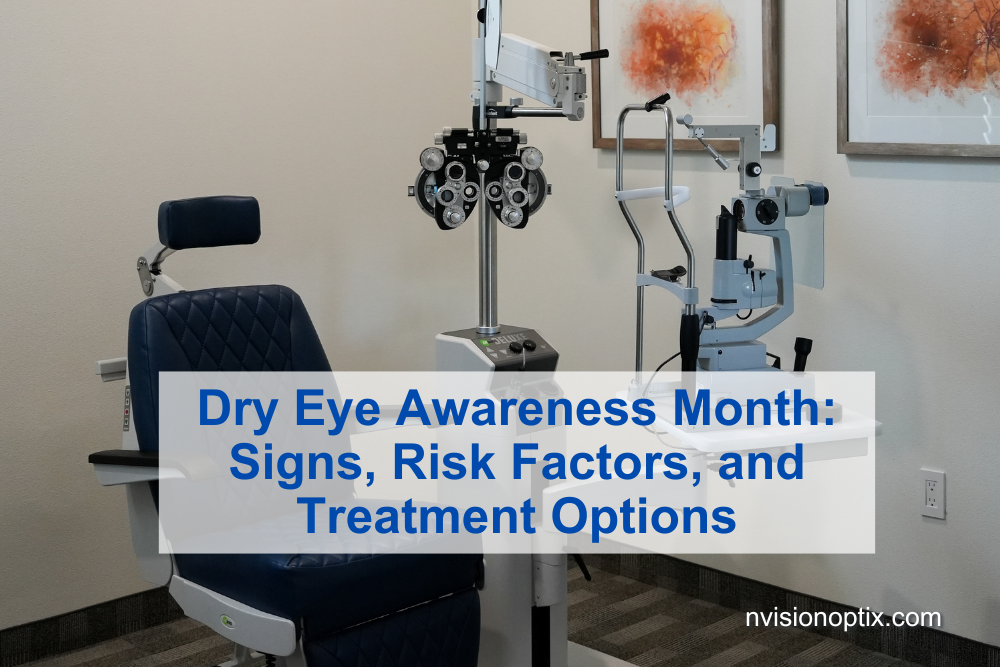
Optimize your understanding of dry eye disease, its symptoms, risk factors, and treatment options during Dry Eye Awareness Month. Let NVision Optix help you identify the signs early and explore effective ways to manage and treat this common condition with our comprehensive guide.
Step-by-Step Guide
Step 1: Recognize Common Dry Eye Symptoms
Dry eye can manifest in a variety of ways including a gritty sensation, burning, redness, itching, blurry vision, light sensitivity, and unexpected excessive tearing. The specialist at NVision Optix can Identify these symptoms and develop a personalized treatment plan to provide treatment and relief.
Step 2: Identify Your Risk Factors
Certain factors may increase your risk of developing dry eye. These include aging, hormonal changes, autoimmune conditions like Sjögren’s syndrome, ocular rosacea, and lifestyle factors such as prolonged screen time or exposure to dry environments. Recognizing these can help prioritize preventative care or early intervention.
Step 3: Evaluate Your Environment
Environmental conditions like low humidity, wind, and dust can exacerbate dry eye symptoms. Be mindful of potential triggers such as air conditioning, extended screen use, and exposure to elements during outdoor activities. Adjusting these factors where possible can reduce symptom severity.
Step 4: Support Your Eyes with Healthy Habits
Adopt habits that promote eye health. Stay hydrated, protect your eyes against elements with eyewear, take breaks during screen time, ensure regular blinking, avoid direct air flow from fans, and ensure adequate sleep. These practices might not cure dry eye but can significantly alleviate symptoms.
Step 5: Understand When to Seek Professional Care at NVision Optix
If dry eye symptoms persist despite lifestyle adjustments or over-the-counter remedies, it is crucial to consult one of our eye care professionals. Persistent symptoms like prolonged dryness, frequent blurry vision, or increased light sensitivity require an expert’s evaluation to tailor an effective treatment plan.
Step 6: Explore Personalized Treatment Options
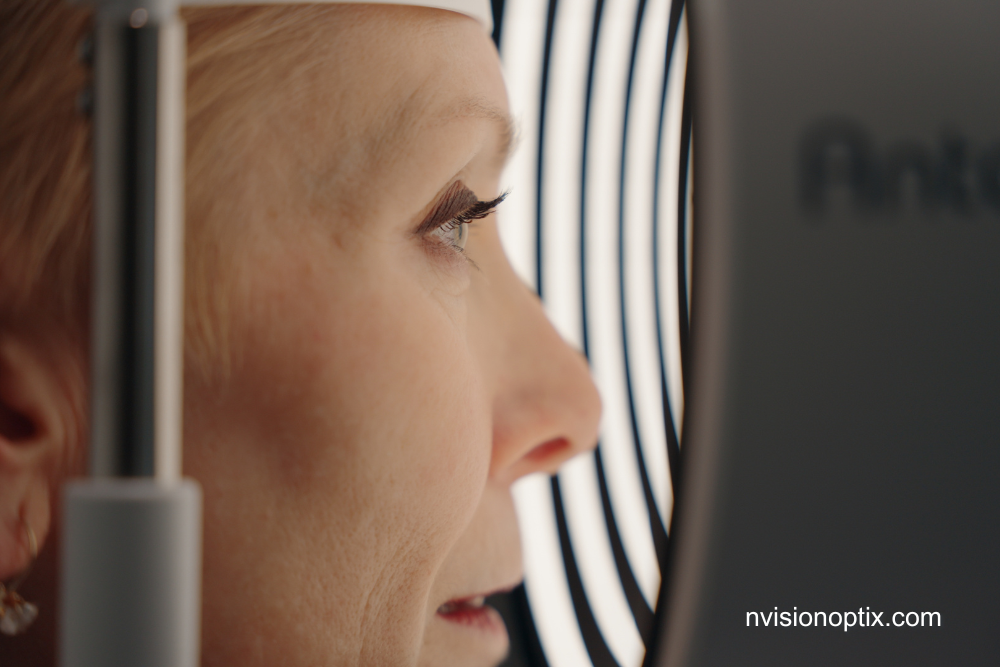
Treatment varies based on the underlying causes of dry eye. Tailored plans can include artificial tears, prescription medications, lifestyle adjustments, and advanced therapies like OptiLight IPL, OptiPlus and OptiLift. Consulting with one of our optometrist can ensure you receive the most suitable treatment.
Comparison of Dry Eye Management Approaches
|
Feature |
General Symptom Management |
Personalized Dry Eye Care |
|
Evaluation |
Basic |
Comprehensive |
|
Treatment Approach |
Generalized |
Tailored |
|
Assess Root Cause |
Limited |
Detailed |
|
Gland and Eyelid Evaluation |
Not always included |
Included |
|
Advanced Treatment Options |
Limited |
Available |
Frequently Asked Questions
What is Dry Eye Awareness Month?
Dry Eye Awareness Month takes place in July to educate about dry eye symptoms, risks, and treatments.
Why do dry eyes become watery?
Watery eyes can result from dry eyes due to irritation prompting reflex tearing, not providing lubrication or the tears lacking the oily layer that helps tears adhere to the surface of the eye.
Can dry eye cause blurry vision?
Yes, an unstable tear film often leads to blurry or fluctuating vision, especially in demanding visual tasks.
Do artificial tears help dry eye?
Artificial tears can offer temporary relief but may not address underlying conditions like inflammation.
When should you see an eye doctor at NVision Optix?
Consult an eye doctor if symptoms persist, worsen, or impact daily life despite over-the-counter measures.
How to Use This Guide
Use this guide to assess and manage symptoms or risk factors during Dry Eye Awareness Month. For persistent issues, consult an eye care professional. Visit NVision Optix or call 775.900.2015 to schedule an evaluation.